Leave the fireplace off when you assess your living room lighting. Close the curtains, switch on the lights you normally use and settle into your usual seat. The mantel may look handsome while the side table disappears into shadow. A favorite reading chair may need more light than the rest of the room.
Those gaps are worth identifying during a fireplace renovation. Alongside choosing the surround and mantel, decide how the room will work on an ordinary evening. A pendant can have a useful role, provided its position follows the furniture and the activity it serves.
Start with the seats and tables
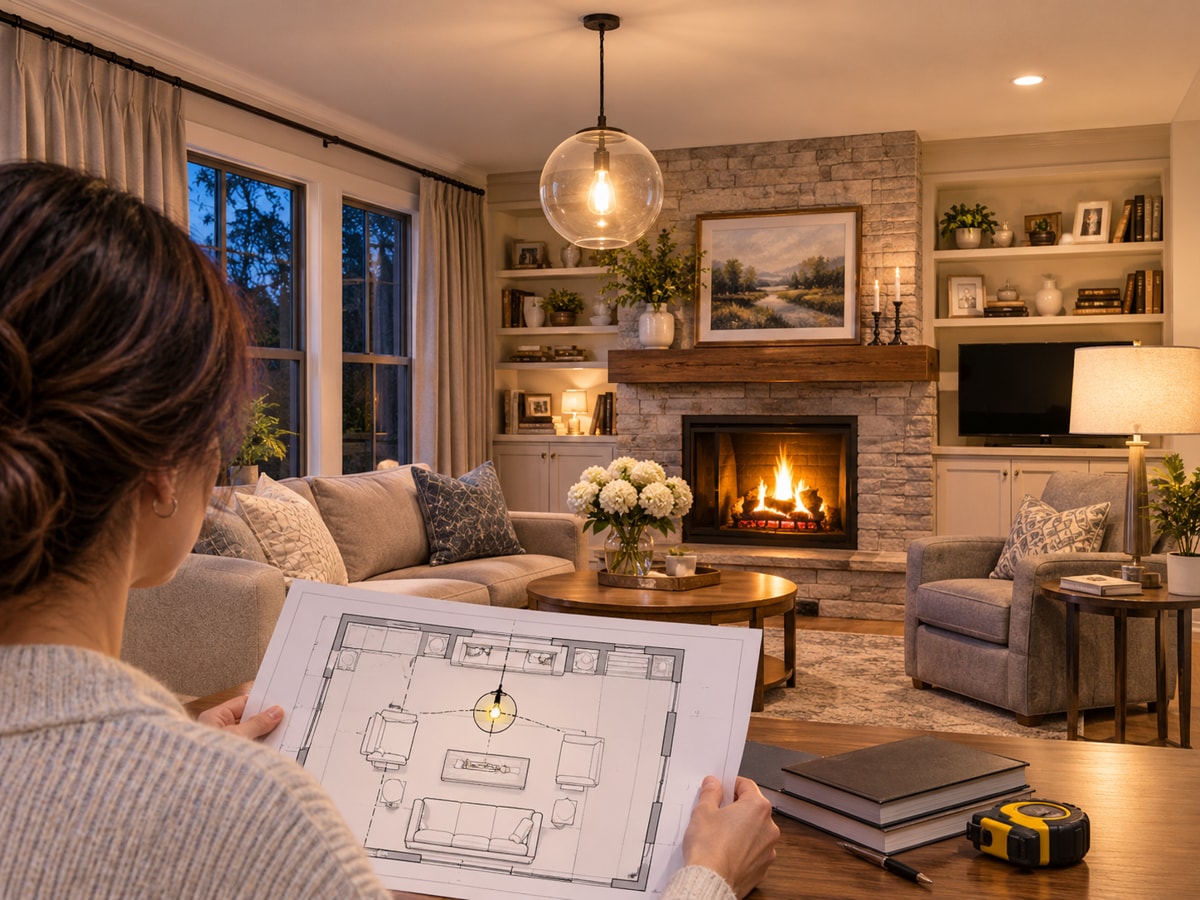
Place the sofa, chairs and tables on the room plan before choosing a ceiling position. Include the seats people actually use, even if that means an armchair sits slightly off-center from the fireplace. Add the route between the doorway and the seating area.
Consider what happens in each spot. A coffee table might hold a board game after dinner. A small table beside a chair may collect a book, glasses and a drink. Decide where additional light would be useful and where the existing lights already do the job.
When comparing pendant lighting, relate the proposed fitting to that layout. A pendant above a table needs a different position from one intended to provide broader room illumination. Check how the selected design directs light before relying on it for a particular task.
If the furniture arrangement is still changing, note that on the plan. Moving a chair is straightforward; moving a fixed ceiling connection becomes another part of the renovation. Settle the important furniture positions before the electrical layout is finalized.
Include the whole fireplace wall in the view
A fireplace wall often contains more than the fire opening. Include the mantel shelf, chimney breast, artwork, television and any adjacent shelving when judging the pendant's position. Its outline can overlap those features from one seat while appearing separate from another.
Use the fitting's complete dimensions to make a paper outline and have someone hold it at the proposed position. View it from the entrance and the main seats. This helps you judge its size against the fireplace wall, although a flat outline cannot reproduce the finished fitting's volume.
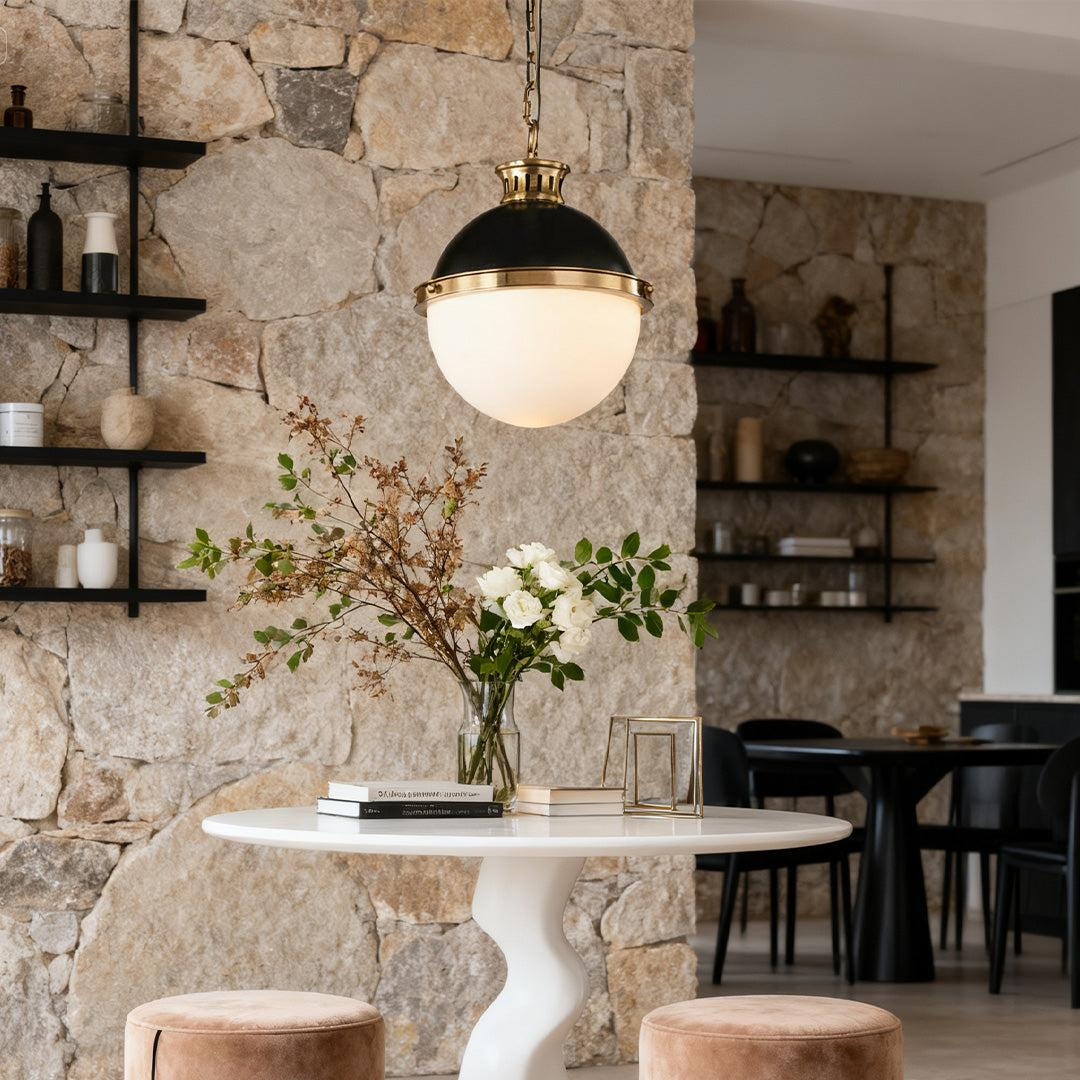
Compare a pendant's complete outline with the texture and details of the wall behind it.
Include the suspension in that comparison. A chain, long metal stem or cluster of cables contributes to the view as much as the shade. Check the canopy and hanging range alongside the globe diameter.
Look closely at the globe construction
The appeal of globe pendant lights is easy to understand: their rounded outline offers a simple shape alongside brickwork, stone or a substantial mantel. The glass and light source still need separate attention.
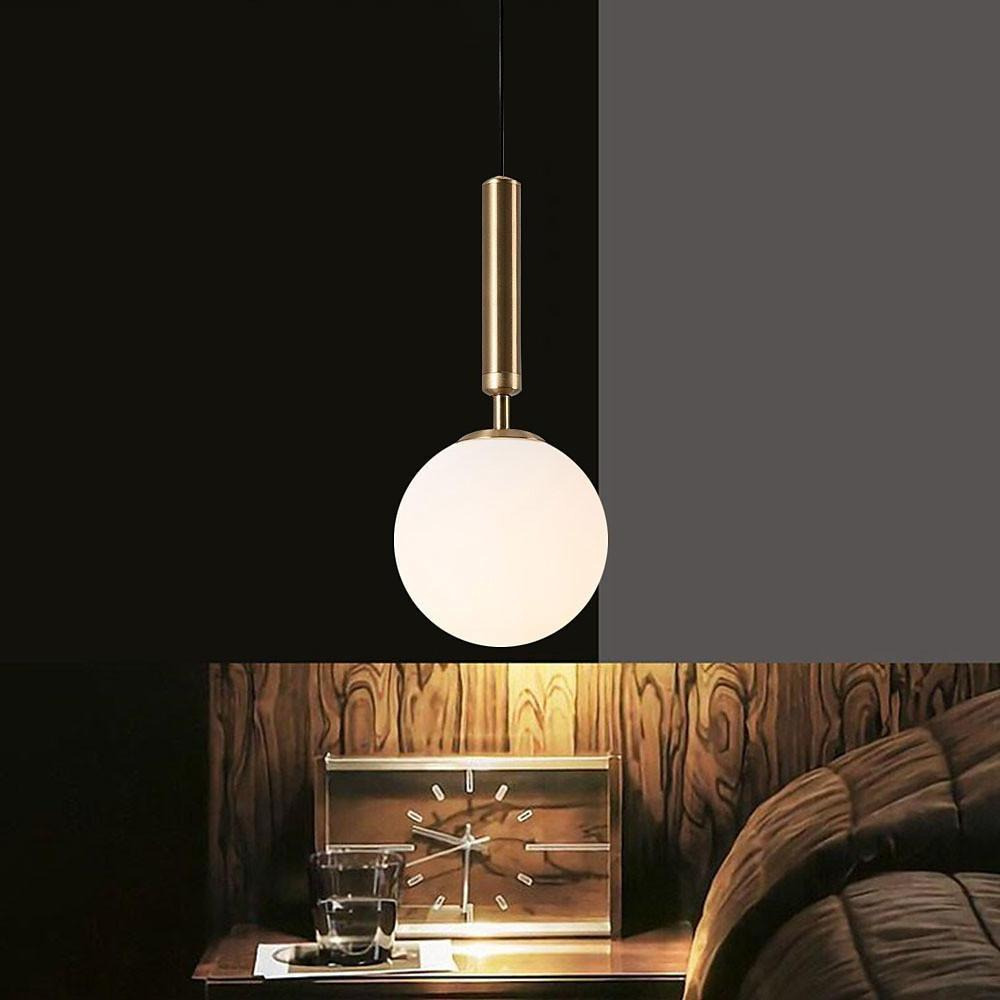
Clear glass leaves more of the bulb visible. Tinted glass, frosted glass and an opaque diffuser have different appearances when illuminated. Look for photographs of the exact version switched both on and off, including a view from below.
The stem and suspension contribute to the overall silhouette alongside the globe itself.
Check source visibility from the intended seating positions, too. A bulb opening that is concealed from a standing person may be visible from a low chair. If the product photographs leave that unclear, ask for another view before ordering.
For a replaceable-bulb design, find out which bulb is specified and whether it is included. For an integrated model, review its stated output and available settings. Globe diameter alone will not tell you how much light reaches the table.
Plan lighting that people can operate separately
A shared room can support several activities at once. Someone may be reading while another person watches television. Decide whether the pendant, existing lamps and other room lights need separate operation, then discuss the options with the electrician.
Where dimming is useful, confirm the exact fixture, light source and control combination. Some models use a separate remote, while others require a compatible wall dimmer. Establish how everyone will use the controls during a normal evening.
With a television or glazed artwork near the fireplace, check reflections from the main seats. Switch the existing lights on individually to identify the sources involved. Discuss any potential reflection from the proposed pendant while its position is still being planned.
Confirm the details before the room is finished
Have the contractor assess the final pendant position alongside the fireplace specification. For an operating fireplace, the relevant manufacturer instructions and required clearances need to inform the arrangement. Record the confirmed location with the installation information.
Agree on the ceiling connection, controls and any repair or decoration work before the finishes are completed. Include the selected fitting's dimensions and installation instructions in that discussion.
Keep one final drawing showing the furniture, pendant position and control locations. Add the exact product version and mark any remaining decisions. That gives the people finishing the room a clear reference when the fireplace, furniture and lighting are being brought together.