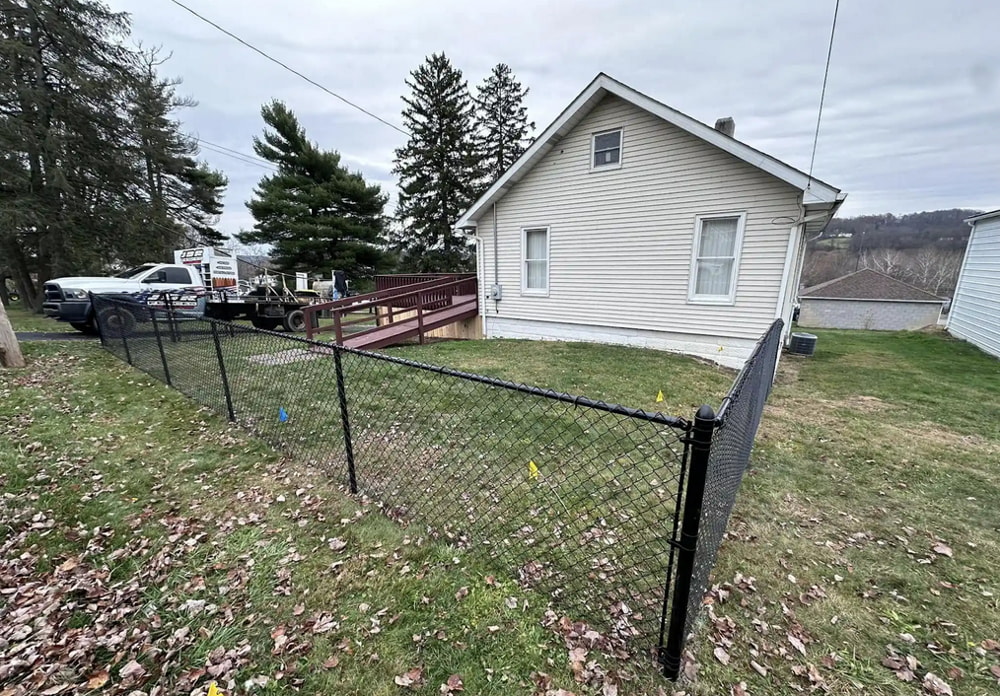
our Pittsburgh yard isn't flat. Your soil isn't cooperative. And that fence you're planning? It needs to survive hills, clay, and brutal freeze-thaw cycles, or it won't last.
Most fencing advice ignores what makes Pittsburgh different. This guide doesn't. Here's what actually works: the right materials, realistic costs, and installation methods built for terrain that fights back.
Choosing the Right Fence for Your Needs
Before comparing materials or pricing, it's essential to be clear on why you're installing a fence in the first place. In Pittsburgh, function should always lead design.
Privacy
Privacy fencing is one of the most common requests, especially in tightly spaced neighborhoods or homes with shared sightlines.
Typical goals include:
Blocking views from neighboring yards or alleys
Creating a more usable outdoor living space
Shielding patios, pools, or hot tubs
Solid-panel fences and taller designs are popular, but height limits and terrain can affect what's practical and compliant.
Security
For corner lots, rear alleys, or homes near foot traffic, fencing can add an extra layer of security.
Key considerations:
Fence height and visibility
Lockable gates
Durable materials that resist tampering
Security-focused fences often balance strength with visibility, especially in front or side yards.
Decorative & Curb Appeal
Not every fence is about enclosure. In many Pittsburgh neighborhoods, front-yard fencing is primarily used for aesthetic purposes.
These fences:
Define property boundaries without blocking views
Complement older architecture or historic homes
Improve curb appeal rather than privacy
Design consistency matters here. What works in one neighborhood may look out of place in another.
Pet & Child Containment
If you're fencing for kids or pets, safety details matter more than style alone.
Think about:
Fence height relative to pet size
Spacing between pickets or panels
How slopes or gaps could allow escapes
In hilly yards, containment fencing requires careful planning to avoid openings at grade changes.
Fence Materials Compared: What Actually Works in Pittsburgh
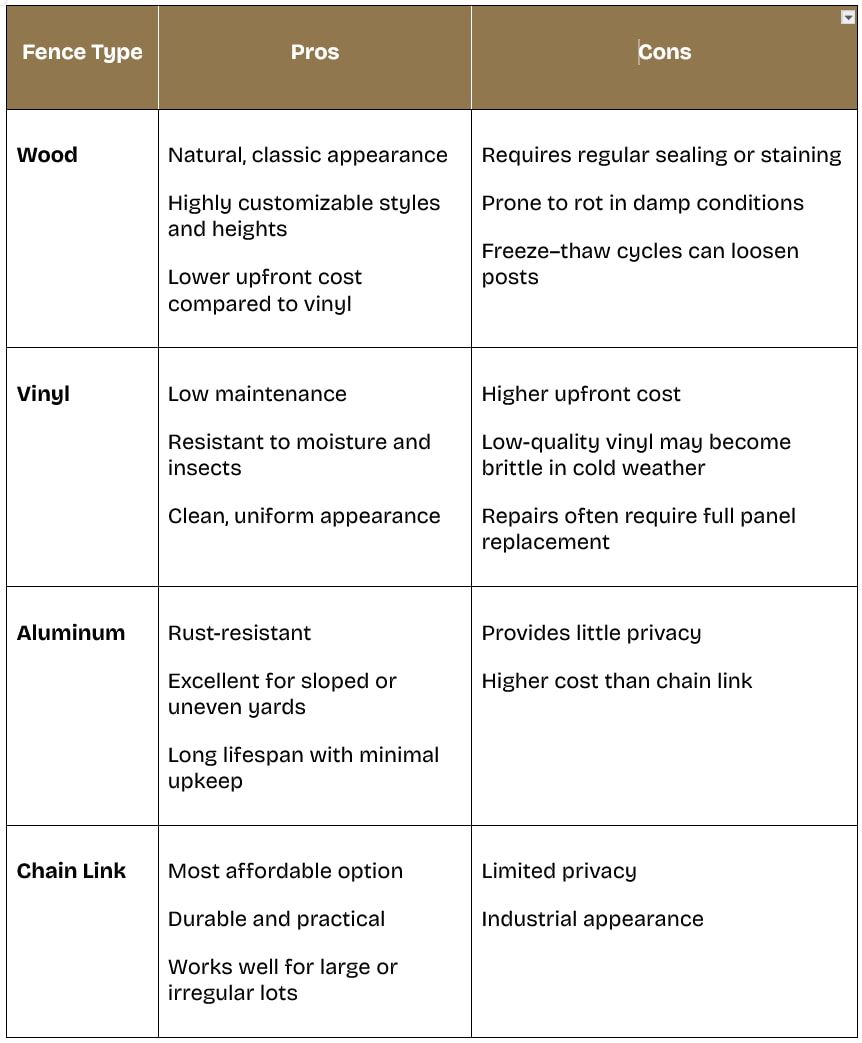
Not all fencing materials perform the same in Pittsburgh’s climate. Moisture, temperature swings, and soil movement can shorten the lifespan of the wrong choice. Here’s how the most common options stack up locally.
Cost Breakdown: What Pittsburgh Homeowners Can Expect
Fence pricing in Pittsburgh varies widely because very few yards are truly "standard." While material choice sets the baseline, terrain and installation complexity often have just as much impact on the final cost.
Average Cost Ranges (Installed)
Below are some ballpark estimates. Actual pricing depends on site conditions.
Wood fencing: $20–$35 per linear foot
Vinyl fencing: $30–$50 per linear foot
Aluminum fencing: $25–$45 per linear foot
Chain link fencing: $15–$30 per linear foot
What Drives Costs Up (or Down)
Several Pittsburgh-specific factors influence pricing:
Slopes and elevation changes requiring stepped or racked installation
Rocky or clay-heavy soil that slows post setting
Yard size and layout, including corners and angles
Gate quantity and size
Removal of old fencing
A small, flat backyard can be relatively straightforward. A long fence line on a hillside with multiple grade changes is not, and the price reflects that.
This is where many fencing projects run into trouble. Pittsburgh's terrain and soil demand more than a one-size-fits-all approach.
Hills and Slopes
Much of the region is built on uneven ground. Improper installation on slopes can result in:
Visible gaps under panels
Uneven fence lines
Premature structural stress
Clay and Rocky Soil
Pittsburgh soil often contains dense clay or buried stone, both of which complicate post installation.
Posts may require a deeper footing
Standard augers may struggle or fail
Improper anchoring can lead to leaning fences over time
Property Lines and Easements
Older neighborhoods frequently have:
Inconsistent or outdated surveys
Utility easements running through yards
Narrow setbacks
In some cases, homeowners choose to address grading, drainage, or yard leveling before installing a fence, especially on steep or uneven lots. Working with experienced local landscapers can make this process smoother and make homeowners explore site-prep options before installation begins.
Why Installation Technique Matters
Because of these challenges, how a fence is installed can matter just as much as what it's made from. Some local fence companies use specialized equipment and slope-adapted installation methods explicitly designed for uneven terrain and difficult soil conditions.
That's worth asking about when comparing contractors, since it affects installation time, durability, and long-term performance. JBR Fences in Pittsburgh emphasizes terrain-aware installation approaches, which are important considerations for Pittsburgh homeowners dealing with hills, slopes, or rocky ground.
Permits and Local Regulations: What You Need to Know
One common concern homeowners have is whether a permit is required before starting a fence project.
The General Rule
In many Pittsburgh-area municipalities:
Residential fences under 6 feet often do not require a permit
However, this is not universal.
Where Rules Can Change
Permit and zoning requirements may vary based on:
Borough vs. city jurisdiction
Corner lots
Historic districts
HOA or neighborhood covenants
Fence placement near sidewalks or alleys may also be subject to additional restrictions.
Best Practice
Before installation:
Check with your local municipality or zoning office
Confirm any HOA guidelines
Review setback and height rules
A quick check upfront helps prevent delays, fines, or forced modifications after installation.
Installation Timeline: What to Expect
One of the most common questions homeowners ask is how long a fencing project actually takes. While every yard is different, most residential fence installation projects in the Pittsburgh area follow a reasonably predictable timeline.
Typical Timeline
Initial estimate & planning: 1–2 weeks
Material ordering: 1–3 weeks (depending on material and season)
On-site installation: usually 2–5 days
Smaller, flat yards can sometimes be completed faster. Larger properties, custom layouts, or sloped terrain may take longer.
Scheduling fencing outside peak spring and summer months can sometimes reduce wait times.
Maintenance Requirements by Material
Maintenance is often overlooked during planning, but it plays a significant role in long-term cost and appearance, especially in Pittsburgh's climate.
Wood
Requires staining or sealing every few years
Needs regular inspection for rot or moisture damage
Higher maintenance, but easier to repair piece by piece
Vinyl
Occasional cleaning with soap and water
No painting or sealing required
Inspect after extreme cold for cracks
Aluminum
Minimal upkeep
Periodic inspection of fasteners and gates
Resistant to rust and corrosion
Chain Link
Low maintenance overall
Check for rust in older galvanized systems
Repairs are usually simple and inexpensive
ROI: Does a Fence Increase Home Value in Pittsburgh?
A fence won't always add a fixed dollar amount to your home's appraised value, but it can significantly impact buyer appeal and marketability.
Where Fencing Adds the Most Value:
Homes with pets or young children
Properties where privacy is limited
Yards used for entertaining or outdoor living
Corner lots or homes near foot traffic
In these cases, fencing is often seen as a lifestyle upgrade rather than a cosmetic add-on.
Practical vs. Financial ROI
While you may not recoup 100% of the cost at resale, a well-designed, well-maintained fence can:
Help a home sell faster
Reduce buyer objections
Make a property feel more complete and move-in ready
In competitive Pittsburgh neighborhoods, that perception can matter just as much as the numbers. For more on how home improvements boost property value, consider strategic upgrades that complement your fencing project.
Questions to Ask Fence Contractors Before Hiring
Before choosing a contractor, it's worth asking a few targeted questions to avoid surprises.
How do you handle sloped or uneven yards?
What installation methods do you use for rocky or clay soil?
Is post depth adjusted for freeze–thaw conditions?
What warranties are offered on materials and labor?
Can you provide local references?
Fencing Smarter in Pittsburgh
The bottom line: Pittsburgh fencing isn't plug-and-play. Terrain matters. Soil matters. Installation technique matters. Choose materials that handle local conditions, plan for the challenges upfront, and work with contractors who've actually dealt with hills and clay. Do that, and your fence will deliver in the long term.