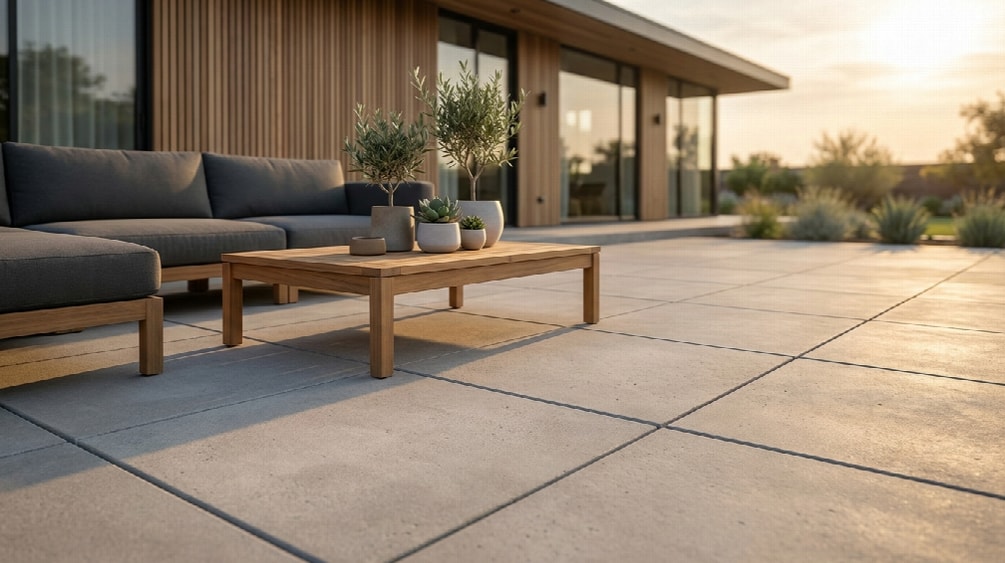
Large format pavers have become a go-to choice for homeowners who want a clean, modern patio with fewer visible joints. This guide explains what sets them apart, where they work best, what to watch for, and how to pick the right size, finish, and base for your outdoor space.
What Are Large Format Pavers?
Large format pavers are oversized concrete or stone units, generally measuring at least 24 inches on one side, used to surface patios, walkways, and pool decks. Their bigger footprint covers more ground per unit, which creates longer sight lines and fewer seams across a finished surface.
Manufacturers like Techo-Bloc produce large format pavers in slab and plank shapes built for outdoor use. Choosing a dedicated outdoor-rated product matters here, because units made for patios are engineered to handle moisture, ground movement, and the repeated freeze-thaw cycles that would crack lighter indoor tile.
How Do Large Format Pavers Differ From Standard Pavers?
Standard pavers usually measure 6 to 12 inches per side and read as a repeating brick-style pattern. Large format pavers flip that look by using fewer, wider units that stretch across the patio.
The practical differences come down to 3 things:
- Coverage: Each large unit spans more area, so a patio needs fewer pieces overall.
- Joint count: Wider units mean fewer joints, which reduces the lines that collect debris and weeds.
- Weight: Bigger units are heavier per piece, which changes how they get handled and set during installation.
This combination gives large format pavers a smoother, more continuous surface than a traditional small-paver field.
Which Patio Styles Suit Large Format Pavers?
Large format pavers fit contemporary and transitional patios best, where clean lines and open space drive the design. A modern layout with minimal joints reads as calm and uncluttered, which suits square or rectangular patios.
They also work well for indoor-outdoor flow. Running a similar tone from interior flooring to a wide-plank patio makes a backyard feel like a true extension of the home.
What Are the Benefits of Large Format Pavers for a Patio?
Large format pavers deliver 3 clear advantages for a patio: a more open visual field, less routine upkeep, and a surface that can make small spaces feel bigger. Each benefit ties back to the size of the unit itself.
Do Fewer Joints Really Mean Less Maintenance?
Yes. Fewer joints give weeds and moss fewer places to take hold, so a large-format patio needs less spot-weeding through the season. Joints are the main entry point for growth and the first spot where jointing sand washes out, so cutting their number cuts the work.
Sweeping and rinsing stay simple too. A wide, continuous surface clears faster than a field of small units with dozens of seams running through it.
How Do Large Pavers Change the Look of a Patio?
Large pavers stretch the eye across a surface, which makes a patio feel wider and more open. Fewer joint lines remove visual clutter, so the space reads as one surface rather than a grid of parts.
Color and finish amplify that effect. A consistent tone across big units keeps the look quiet and modern, and a subtle texture adds depth without breaking up the plane.
Are There Drawbacks to Large Format Pavers?
Large format pavers carry a few trade-offs worth weighing before you commit: they demand careful base work, they are harder to handle, and they cost more upfront than many alternatives. None of these rule them out, but each one shapes how a project runs.
How Hard Are Large Pavers to Install?
Large pavers are more demanding to install than small ones because their size leaves no room for an uneven base. A small paver can ride over a minor dip, but a wide unit will rock or crack if the surface below is not flat and compacted.
Handling adds a second challenge. Each unit is heavy and often needs 2 people and suction tools to set cleanly, so a patio in large format usually takes more labor per square foot than a small-paver install. Many homeowners bring in a certified contractor for this reason.
What Base Preparation Do Large Pavers Need?
Large pavers need a deep, well-compacted base and a flat setting bed to perform over time. The base carries the load and keeps units from shifting, so skipping depth or compaction leads to rocking and cracked corners later.
Drainage belongs in that plan too. A slight, even slope moves water off the surface and protects the base from washout, which keeps a wide-paver patio stable through wet seasons and freeze-thaw swings.
How to Choose the Right Large Format Pavers for Your Patio
Choosing the right large format pavers comes down to matching size, finish, and climate rating to how you will actually use the patio. Work through each factor in order, as one choice often narrows the next.
What Sizes and Thicknesses Work Best for Patios?
Patio projects favor slabs and planks in the 24-inch range and up, set on a prepared base. Thickness should match the load: foot-traffic patios use thinner units, and surfaces that carry heavier loads call for a thicker profile.
Proportion matters as much as raw size. Match the unit size to the patio footprint so a small deck does not end up with only a few oversized pieces, and a large patio does not look busy with undersized units.
Which Finishes and Colors Hold Up Outdoors?
Outdoor finishes should balance grip and upkeep. A textured or lightly tumbled surface holds traction when wet. A smooth finish reads more modern but can feel slick around a pool.
Color choice affects comfort and longevity. Lighter tones stay cooler underfoot in direct sun and hide dust. Mid-tone blends disguise the odd scuff and keep a patio looking even as it ages.
How Does a Freeze-Thaw Climate Affect Paver Choice?
In cold climates, pick pavers engineered to resist freeze-thaw cycles, as water that seeps in and freezes is what breaks weaker units apart. Products rated for outdoor use in northern regions are built to shed water and resist that damage.
A proper base and drainage back up the product choice. Even a freeze-thaw-rated paver needs water moving away from it, so base prep and slope stay part of the durability equation in any cold-weather patio.
What Should You Budget for a Large Format Paver Patio?
Large format pavers cost more upfront than poured concrete or small generic pavers, both in material and in the labor their installation demands. That higher starting price is the trade-off for a premium surface built to last.
The value shows up over time. A well-installed large-paver patio resists cracking, needs little routine repair, and avoids the seasonal patching that catches up with cheaper surfaces, so the long-term maintenance savings often justify paying more at the start. Budget for quality base work and skilled labor, not just the pavers themselves, as the install is what protects the investment.
Key Takeaways for Choosing Large Format Pavers
Large format pavers suit homeowners who want a clean, modern patio with less routine upkeep and are ready to invest in proper installation. They reward careful base prep and a climate-appropriate product with a surface that stays flat, open, and low-maintenance for years.
If your patio is square or rectangular, your style leans contemporary, and you value fewer joints over the lowest upfront price, large format pavers are likely the right call. If you need a budget surface or plan a tight DIY timeline, a smaller paver may fit the project better.
Frequently Asked Questions About Large Format Pavers
Are Large Pavers a Good Choice for Patios?
Yes, large pavers work well for patios that favor a modern look and lower upkeep. They create an open, continuous surface with fewer joints, though they need a flat, well-compacted base to perform.
How Big Is a Large Format Paver?
A large format paver generally measures at least 24 inches on one side, and many slabs and planks run larger. The exact dimensions vary by product line and shape.
Do Large Pavers Crack More Easily Than Small Ones?
Large pavers crack more easily only when the base is poor. On a deep, compacted, well-drained base, a quality large paver stays stable, but an uneven bed puts stress across the wider unit.
Can You Install Large Format Pavers Yourself?
You can, but it is harder than a small-paver project. The units are heavy, often need 2 people and suction tools, and leave no margin for an uneven base, so many homeowners hire a certified contractor.